XD
Benjamin Moore Digital Vision
Experience Design — UX Strategy, Information Architecture & Product Discovery
I led UX strategy and information architecture for Benjamin Moore's digital vision — a framework for how a premium paint brand could evolve from a browse-and-sample site into a color-first digital experience serving homeowners, contractors, and architects alike. The framework was built to be evergreen: adaptable across mobile, desktop, and in-store touchscreens, and set up to connect education, color discovery, and commerce.
The Challenge
[IMAGE: Current-state analysis / original site screenshots or baseline audit]
Benjamin Moore is a brand that lives in color — and in people's physical spaces, their homes and their work. But their digital presence didn't match that promise. The site wasn't transactional: the most a user could do was order samples. The product catalog was genuinely complex — paint types, finishes, sizes — making product pages a challenge in their own right. Navigation and UI were working against each other, and years of rich brand collaborations, like the work with color specialist Eve Ashcraft, lived entirely outside the digital experience.
On top of that, we were designing for three distinct audiences — consumers, contractors, and architects & designers — on a tight timeline, and needed one conceptual framework with universal appeal that could serve all of them, starting with the consumer.
Process

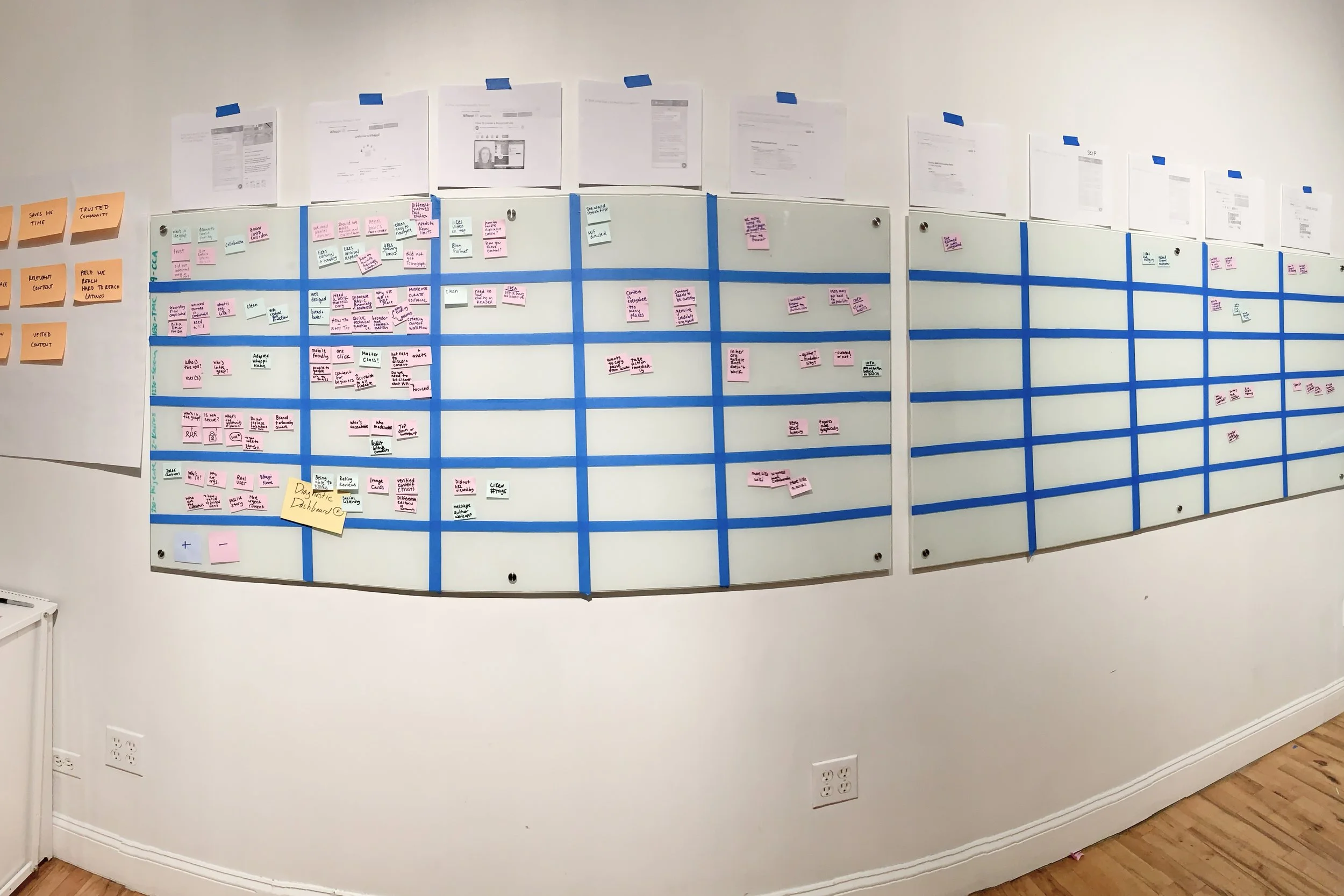
We started by taking the existing experience apart. A high-level baseline analysis of the current site, then a full deconstruction of the architecture into a sitemap — mapping every element, category, and clash between navigation and UI so we understood the true depth of the undertaking before deciding what to solve.
In parallel, we ran a competitive analysis that went beyond paint. I looked at fashion and beauty — brands that, like Benjamin Moore, sell color. This was the moment beauty retail was booming, and MAC Cosmetics offered the key reference: an experience built on the expectation that anyone could become a makeup artist, no matter their skill level.
That became our insight: meet users wherever they are in their color journey. Educate and empower, and let the user drive — through search, browse, product detail pages, or more immersive pathways.
From there we worked through card sorts, developed concepts and wireframes for color exploration built around their signature color grid, and mapped user journeys into every area of the experience — including a circular navigation exploration that reimagined how users could move through color.
[IMAGE: Sitemap — the architecture deconstruction]
[IMAGE: Wireframes / color exploration concepts — circular navigation]
[IMAGE: Card sort or user journey mapping]
Sprint Prototype
Solution

[IMAGE: Final vision screens — key concepts across devices]
A conceptual framework and information architecture that simplified navigation into an intuitive entry point, unified three audiences under one universal experience, and used conversational language any audience could follow. Content and SEO were woven into the experience rather than bolted on, and filters connected to how users actually feel about style — cleaning up product detail pages in the process.
The framework was designed to be evergreen and platform-agnostic: applicable to mobile, desktop, or in-store touchscreens, all connecting back to the e-commerce experience.
The work also built bridges inside Benjamin Moore. Through this project we learned about color tools their engineering team had been developing internally — experiments without a home — and gave them dedicated real estate within the future digital experience.
Impact
This was a strategic exercise, but one built to last: the framework and visual direction established here became a foundation for Benjamin Moore's digital experience going forward. The project surfaced work that had been siloed inside the organization, connected internal teams around a shared vision, and demonstrated the value of the engagement — Benjamin Moore continued as a long-term client of the team's leadership beyond this project.
My Role: UX Strategy & Information Architect
Process: Site audit · Competitive & aspirational analysis · card sorting · concepts & wireframes
Client: Benjamin Moore | Year: 2012 | Agency: LBi